




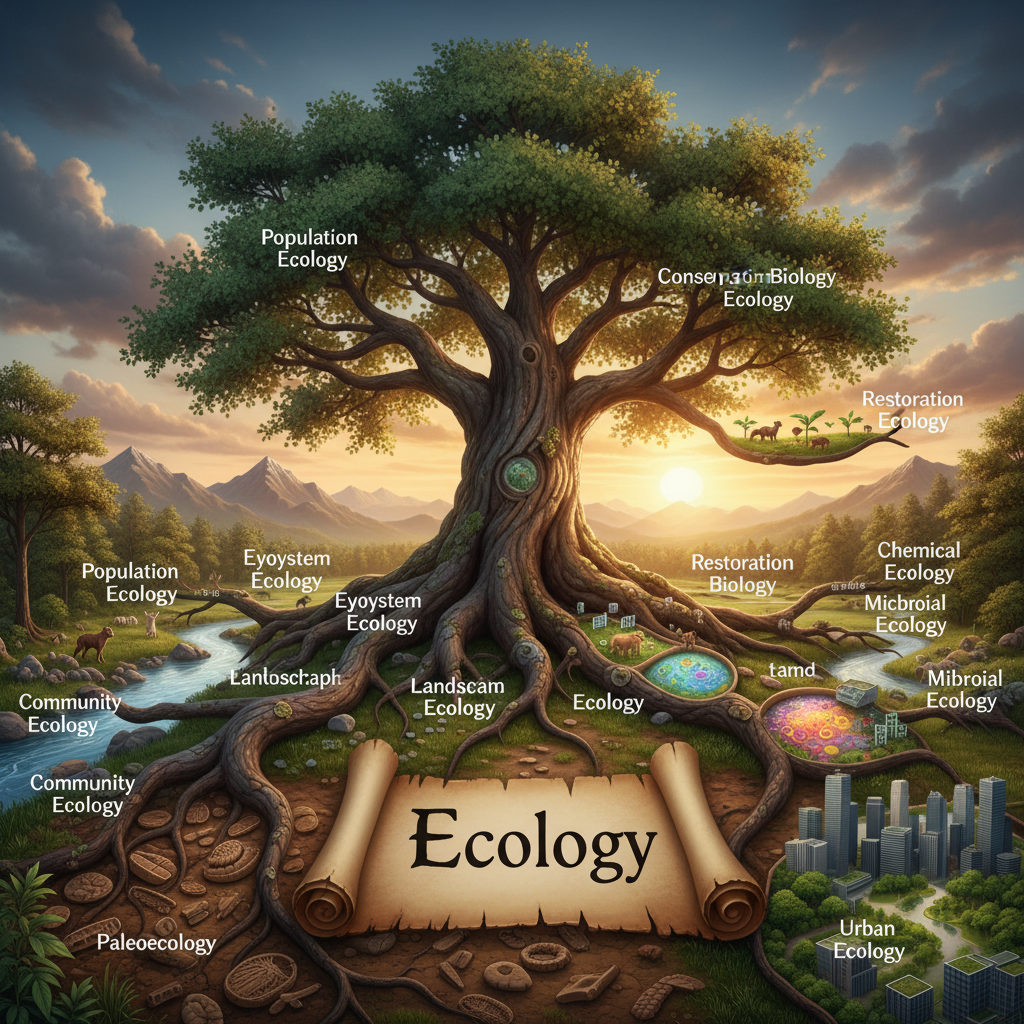
A growing body of urban ecology research is revealing how cities are becoming evolutionary pressure cookers, forcing wildlife to adapt at unprecedented rates while simultaneously offering scientists unique laboratories to study rapid biological change. Recent studies published in 2024 and 2025 document everything from city birds developing different songs to urban spiders growing larger than their rural counterparts — findings that are increasingly informing how planners design more biodiverse, resilient cities worldwide.
The Rise of Cities as Evolutionary Laboratories
For decades, urban environments were viewed primarily as biological dead zones — sterile expanses of concrete hostile to most wildlife. That perception has been overturned by a generation of urban ecologists who now see cities as among the most dynamic ecosystems on Earth. Research coordinated through global initiatives like the Global Urban Evolution (GLUE) project has shown that the same plant species can evolve different traits in dozens of cities simultaneously, suggesting urbanization is one of the most powerful selective forces shaping life today.
The white clover study, which spanned 160 cities across 26 countries, demonstrated that plants in urban centers consistently produced less hydrogen cyanide — a chemical defense against herbivores — compared to their rural relatives. The reason: urban heat islands and reduced herbivore populations changed the cost-benefit calculus of producing the compound. Findings like these have helped establish urban evolution as a legitimate subdiscipline within ecology.
Wildlife That Thrives Where Humans Do
The list of species adapting to urban life keeps expanding. Coyotes have colonized nearly every major North American city, peregrine falcons nest on skyscrapers in place of cliffs, and urban foxes in the United Kingdom now show measurable skull differences from their countryside counterparts. According to data compiled by the journal Nature Ecology & Evolution, urban wildlife often display bolder behavior, altered diets, and shifted activity patterns — typically becoming more nocturnal to avoid human disturbance.
Birds offer perhaps the most studied examples. Great tits in European cities sing at higher pitches to compete with low-frequency traffic noise, while urban house finches have shown changes in beak morphology associated with novel food sources at backyard feeders. Researchers have also documented that urban-dwelling birds tend to have larger brains relative to body size, a trait that may help them solve the cognitive puzzles of city life.
Why This Matters for Conservation and Public Health
The implications extend well beyond academic curiosity. As more than half the global population now lives in urban areas — a figure projected to reach nearly 70% by 2050 according to the United Nations Department of Economic and Social Affairs — cities will increasingly determine the fate of biodiversity. Urban green spaces, when designed with ecological principles, can serve as refuges for native species, corridors for migration, and buffers against extreme weather events linked to climate change.
Public health researchers have also begun integrating urban ecology into their work, recognizing that biodiverse cities tend to have healthier residents. Exposure to varied microbial communities in green spaces may help regulate human immune systems, while access to nature is consistently linked to lower rates of anxiety and depression. Cities like Singapore, Melbourne, and Berlin have begun explicitly designing for biodiversity, planting native species along transit corridors and converting rooftops into pollinator habitats.
Challenges and the Road Ahead
Not all wildlife benefits equally from urbanization. Specialist species — those with narrow ecological requirements — continue to decline sharply in cities, even as generalists thrive. This homogenization concerns ecologists, who warn that cities worldwide may end up sharing similar suites of adaptable species while losing their distinctive regional biodiversity. Light pollution, chemical contamination, and roads that fragment habitat remain persistent challenges.
Looking forward, the next wave of urban ecology research will likely focus on integrating genomic data, citizen science platforms, and artificial intelligence to track how species evolve in real time. Planners and policymakers are watching closely, knowing that decisions made about zoning, tree canopy, and stormwater infrastructure today will determine which species share our cities tomorrow. As climate pressures mount, the cities that succeed in fostering biodiversity may also prove most resilient for the humans who live in them.
For more stories on the science shaping our world, visit science.wide-ranging.com and explore related coverage on ecology, conservation, and the natural world.