




A wave of fresh research and industry announcements in 2025 is reshaping the timeline for fault-tolerant quantum computing, with scientists reporting significant gains in quantum error correction — long considered the field’s most stubborn obstacle. The latest developments, emerging from a combination of academic labs and major technology firms, suggest that the theoretical foundations of quantum computing are finally being matched by practical engineering progress, putting useful quantum machines within reach in the next several years.
Quantum error correction (QEC) is the technique that allows fragile quantum bits, or qubits, to be protected against the constant noise that plagues quantum hardware. Unlike classical bits, qubits cannot simply be copied for redundancy due to the no-cloning theorem, so researchers have spent decades developing sophisticated codes — most notably the surface code — that distribute quantum information across many physical qubits to form a single, more reliable “logical” qubit. Progress here is the gating factor that determines whether quantum computers can ever scale beyond noisy laboratory demonstrations to solve problems of real-world consequence.
The Breakthrough in Context
Google Quantum AI’s late-2024 demonstration with its Willow chip, detailed in a paper published in Nature, showed for the first time that increasing the size of a quantum error-correcting code can exponentially decrease the logical error rate — a milestone known as reaching “below threshold.” That result has shaped much of the 2025 research agenda, with multiple groups now racing to replicate and extend the achievement on different hardware platforms, including trapped ions, neutral atoms, and superconducting circuits.
What makes the current moment distinctive is the convergence of theoretical and experimental progress. New low-overhead codes — including quantum low-density parity-check (qLDPC) codes — are reducing the staggering number of physical qubits previously thought necessary to build a useful logical qubit. IBM has publicly committed to a roadmap centered on qLDPC codes and has stated, via its official quantum blog, that it intends to deliver a fault-tolerant quantum computer named Starling by 2029, capable of running 100 million quantum gates over 200 logical qubits.
Why the Theoretical Side Matters
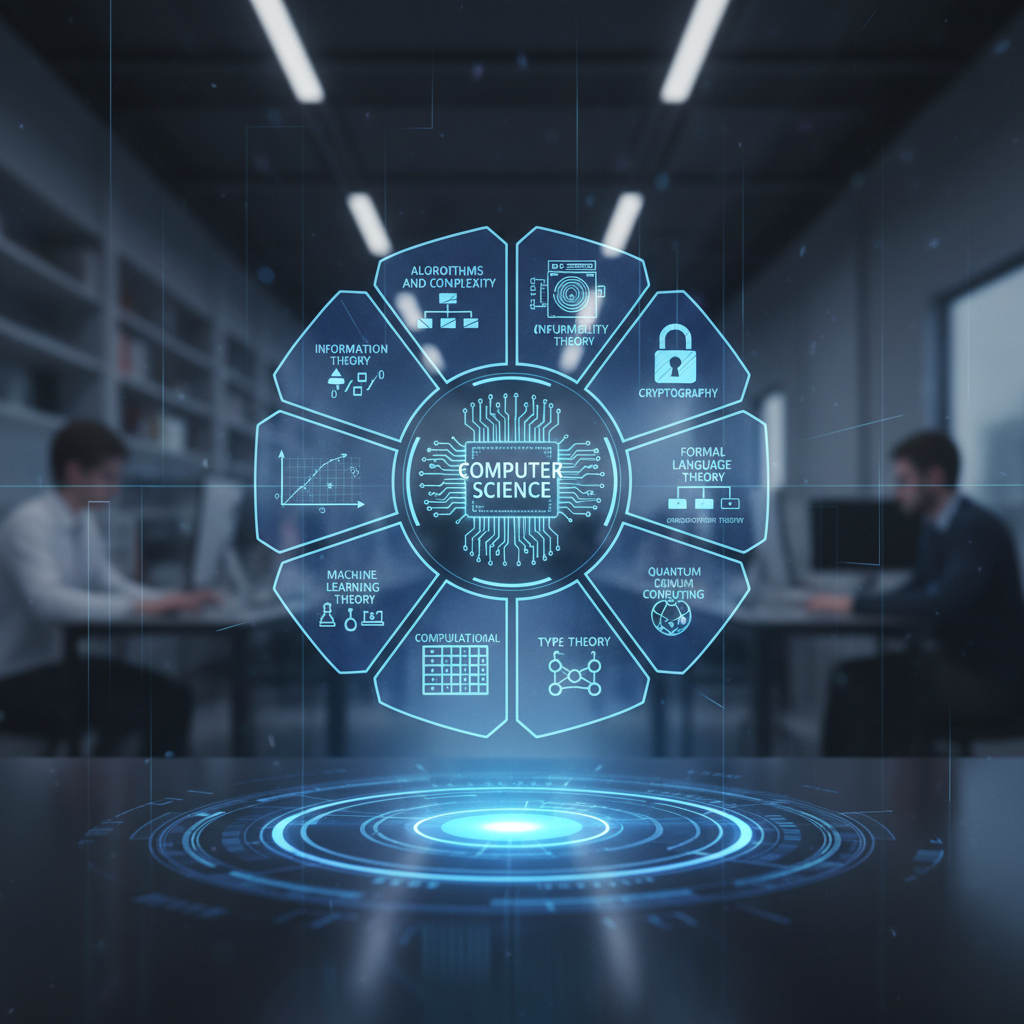
The progress is not merely an engineering story. It rests on decades of foundational work in quantum information theory, including Peter Shor’s original 1995 error-correction code and Alexei Kitaev’s introduction of topological quantum codes. Researchers studying the theory of quantum complexity classes — particularly BQP, the class of problems efficiently solvable by quantum computers — have long argued that without scalable error correction, the famous speedups for problems like integer factorization and quantum simulation remain theoretical curiosities. Recent papers on the arXiv quantum physics archive reflect a surge in submissions analyzing the resource costs of new code families and their compatibility with realistic hardware noise models.
“We are no longer asking whether fault-tolerant quantum computing is possible — we are asking how soon and how cheaply we can build it,” noted Hartmut Neven, founder of Google Quantum AI, in remarks accompanying the Willow announcement. That sentiment is echoed across the field, where the conversation has shifted from existential doubt to logistics and timelines.
Implications for Cryptography and Industry
The acceleration also has urgent implications for cybersecurity. A sufficiently large fault-tolerant quantum computer would be capable of breaking RSA and elliptic-curve cryptography, the backbone of internet security. The U.S. National Institute of Standards and Technology has already finalized its first set of post-quantum cryptographic standards, and federal agencies are under pressure to migrate sensitive systems before so-called “harvest now, decrypt later” attacks become viable. Industries from pharmaceuticals to materials science are watching closely, hoping that quantum simulation — long touted as the technology’s killer application — will finally deliver on its promise of revolutionizing chemistry and drug discovery.
What to Watch Next
The next twelve to eighteen months will likely bring further demonstrations of logical qubits with progressively lower error rates, the first multi-logical-qubit algorithms run on real hardware, and increasing competition between the superconducting, neutral-atom, and trapped-ion approaches. Whether any single platform pulls decisively ahead, or whether hybrid architectures prevail, remains an open question. What seems clear is that the era of treating quantum computing as a distant theoretical curiosity is ending — and the era of building it, qubit by qubit, has firmly begun.
For more coverage of breakthroughs in quantum computing, cryptography, and the theoretical foundations of computer science, visit and bookmark science.wide-ranging.com for ongoing reporting and analysis.