





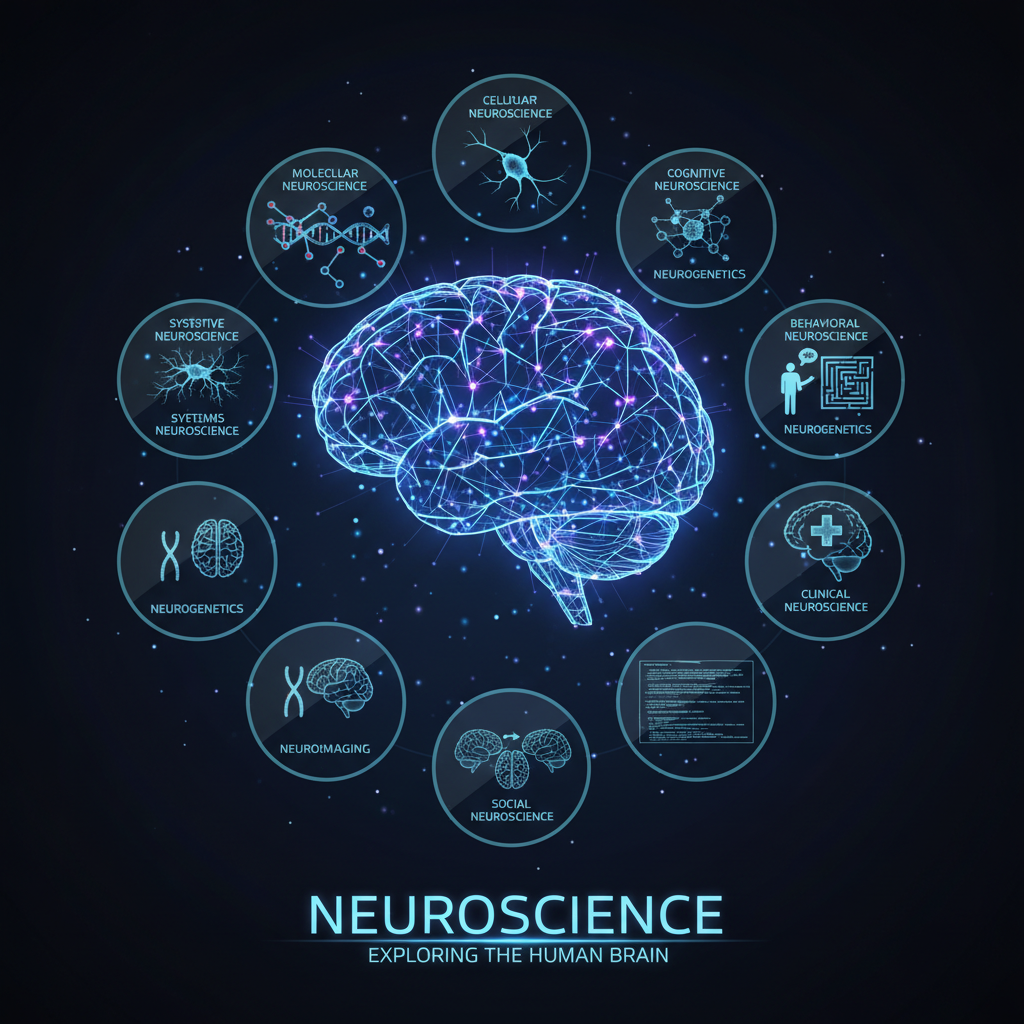
A major international collaboration of neuroscientists has published findings that fundamentally reshape how researchers think about decision-making in the brain, showing that the neural signatures of choice are distributed far more widely across brain regions than previously believed. The work, released by the International Brain Laboratory (IBL) and reported in late 2025, draws on recordings from hundreds of thousands of neurons in mice performing identical decision-making tasks across a dozen labs worldwide — a scale of standardized data collection unprecedented in systems neuroscience.
Background: A New Era for Brain-Wide Recording
Until recently, most neuroscience studies have focused on one or two brain regions at a time, often producing conflicting accounts of where and how cognition emerges. The International Brain Laboratory, founded in 2017, was created specifically to overcome this fragmentation. Its 22 member labs share rigid experimental protocols so that data collected in London, Geneva, Princeton, or Berkeley can be pooled and compared directly. The collaboration has been described as neuroscience’s answer to large-scale physics consortia like CERN.
The latest results, published as companion papers in Nature, used Neuropixels probes — thin silicon shanks capable of recording from hundreds of neurons simultaneously — to sample activity across 279 brain areas in mice while the animals judged the location of a visual stimulus and turned a small wheel to indicate their choice. In total, the team recorded from more than 600,000 neurons, building what may be the most comprehensive functional atlas of the rodent brain ever assembled.
Decision Signals Are Everywhere
The headline finding is striking: signals related to the animal’s upcoming choice, prior expectations, and reward outcomes were detectable in nearly every region examined, including areas long considered purely sensory or motor. Even early visual structures carried information about the animal’s expectations before a stimulus appeared. This challenges the textbook picture of the brain as a tidy assembly line, in which sensation, deliberation, and action are handled by distinct compartments.
“The brain is much more of a distributed organ than the modular view suggests,” IBL co-founder Alexandre Pouget has said in describing the consortium’s approach. The new data support that view quantitatively. Yet the researchers also found regional specialization: while choice-related activity was widespread, certain midbrain and frontal regions carried it earliest and most reliably, suggesting they play a privileged role in committing to an action.
Why This Matters
The implications extend well beyond rodents. Disorders such as Parkinson’s disease, schizophrenia, and obsessive-compulsive disorder all involve disruptions of decision-making circuits, and a brain-wide map of how those circuits normally cooperate could sharpen the search for therapeutic targets. The standardized methodology also offers a template for reproducibility, an issue that has dogged neuroscience as much as it has psychology and biomedicine. Independent analyses by the consortium showed that results held up across labs — a quiet but important victory.
The dataset itself has been made openly available, and tools for exploring it are hosted through platforms like the Allen Institute‘s common coordinate framework, which the IBL adopted to align recordings to a shared anatomical reference. Independent researchers can now test their own hypotheses against the full corpus without rerunning experiments, an arrangement that mirrors the open-data ethos of genomics.
What to Watch Next
The IBL has signaled it will move next toward more complex tasks, including those involving working memory and longer planning horizons, and toward optogenetic perturbations that can test causal roles for specific circuits. Parallel efforts in non-human primates and emerging human intracranial recordings will determine how far the brain-wide picture generalizes up the evolutionary ladder. If the distributed coding principle holds in larger brains, it may force a rethink of decades of region-centric theorizing — and of how clinical interventions, from deep brain stimulation to next-generation neural prosthetics, are designed.
For more coverage of breakthroughs in neuroscience, genetics, and the broader life sciences, visit science.wide-ranging.com for related reporting and analysis.