







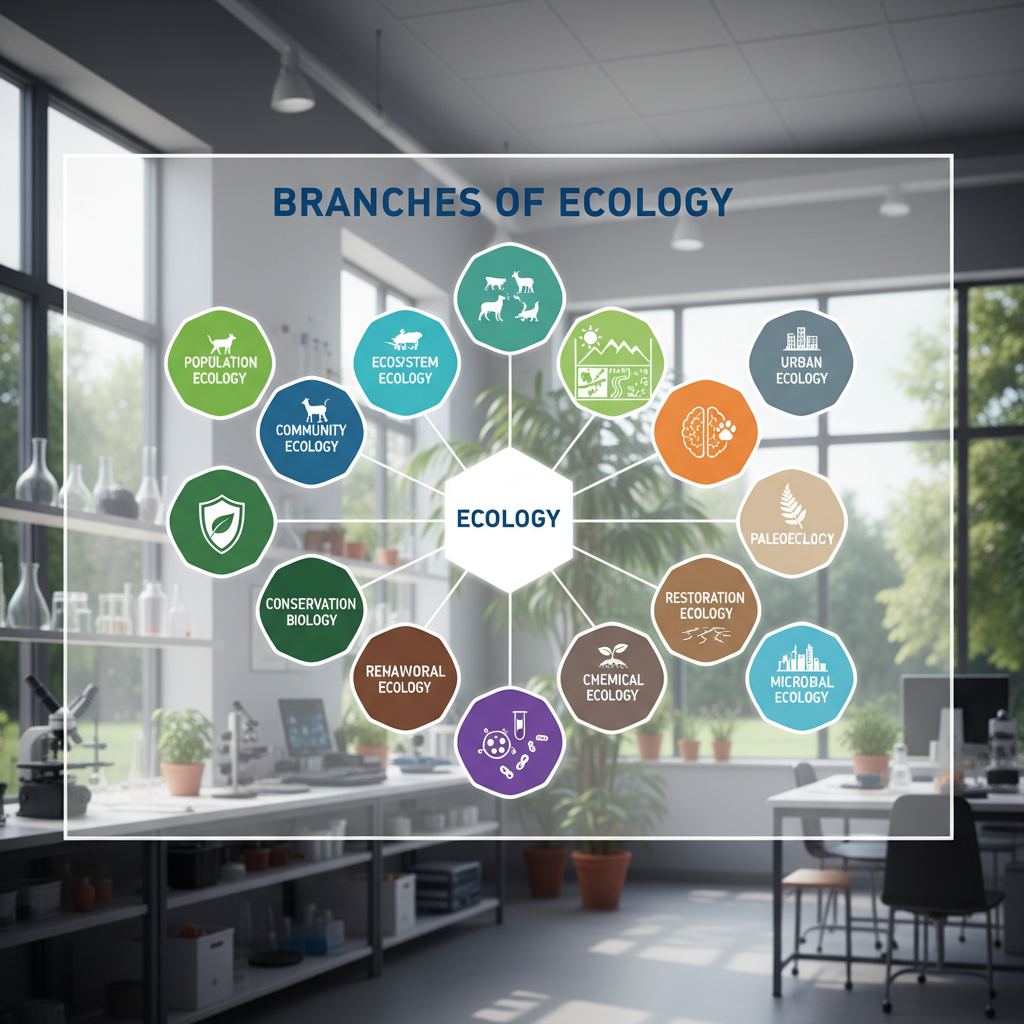
A new wave of paleoecological research published in late 2024 and 2025 is reshaping our understanding of how temperate forest ecosystems responded to abrupt climate change at the end of the last Ice Age, with scientists arguing the findings carry urgent lessons for how managers prepare today’s woodlands for a rapidly warming planet. Drawing on lake sediment cores, fossil beetle assemblages, and ancient DNA recovered from sites across Europe, researchers say forests proved more resilient — but also more idiosyncratic — than long-standing models predicted, with individual tree species migrating at vastly different speeds and along unexpected routes.
What the New Research Shows
The work, synthesised in a series of recent studies coordinated through European paleoclimate networks, examines vegetation shifts during the Late Glacial and early Holocene, roughly 14,700 to 8,000 years ago. During that interval, average temperatures in parts of northern Europe swung by as much as 10°C within decades — a pace not unlike the warming trajectory now projected for the 21st century. By analysing layered pollen grains and macrofossils preserved in anaerobic lake mud, paleoecologists can reconstruct, year by year, which plants colonised which landscapes and how quickly.
One of the most striking findings is that tree species did not march northward in tidy bands, as mid-20th-century textbooks suggested. Instead, hazel, oak, and elm advanced from scattered “cryptic refugia” — small isolated populations that survived in sheltered microclimates far north of the recognised glacial refuges in Iberia, Italy, and the Balkans. Detailed mapping of these refugia has been a major focus of researchers affiliated with institutions such as the Max Planck Society, whose paleogenetics teams have used sedimentary ancient DNA (sedaDNA) to identify species presence even when pollen evidence is ambiguous.
Why Beetles Matter as Much as Trees
Alongside pollen, fossil beetle remains — chitinous exoskeletons that preserve remarkably well in waterlogged sediments — are providing some of the most precise temperature reconstructions yet available. Because many beetle species have narrow climatic tolerances and can fly to track suitable conditions, their presence or absence in a sediment layer functions as a finely tuned thermometer. Recent analyses indicate that insect communities reorganised within a generation or two of climate shifts, often well before the surrounding vegetation caught up — creating temporary mismatches between herbivores, predators, and their host plants.
That lag, researchers argue, is the part of the past most relevant to the present. “Ecosystems do not move as units,” paleoecologist Brian Huntley has long emphasised in writings for outlets including the Royal Society; instead, communities pull apart and reassemble in novel combinations. The fossil record shows that some of these “no-analog” communities persisted for centuries before stabilising into something resembling modern forests.
Implications for Conservation and Forestry
The practical takeaway is sobering. If past warming events produced decades-long ecological mismatches even without human pressures, today’s forests — fragmented by agriculture, roads, and cities — face far steeper odds of natural adaptation. Many tree species migrated at rates of 100 to 500 metres per year during the early Holocene; current climate zones are shifting poleward at several kilometres per year. Conservation biologists increasingly cite this gap as justification for “assisted migration,” the deliberate movement of seeds and saplings to climates they are unlikely to reach on their own.
Recent policy briefings from organisations such as the International Union for Conservation of Nature have begun explicitly invoking paleoecological evidence when arguing for more flexible protected-area boundaries and dynamic species lists. Critics counter that translocations risk introducing pests or disrupting local genotypes, and the fossil record itself shows examples of failed colonisations.
What to Watch Next
Over the coming year, several large coring campaigns in Scandinavia and the Carpathians are expected to publish high-resolution records spanning the 8.2-kiloyear cooling event — a sudden, century-long chill that offers perhaps the closest paleo-analog to abrupt modern change. Combined with expanding sedaDNA libraries, these datasets should sharpen estimates of how quickly forest soils, fungal networks, and understory plants can reassemble. For policymakers drafting the next round of national biodiversity strategies, the fossil archive is no longer a curiosity. It is becoming a planning tool.
For more reporting on paleoecology, conservation science, and the deep history of ecosystems, visit science.wide-ranging.com for related coverage and analysis.