







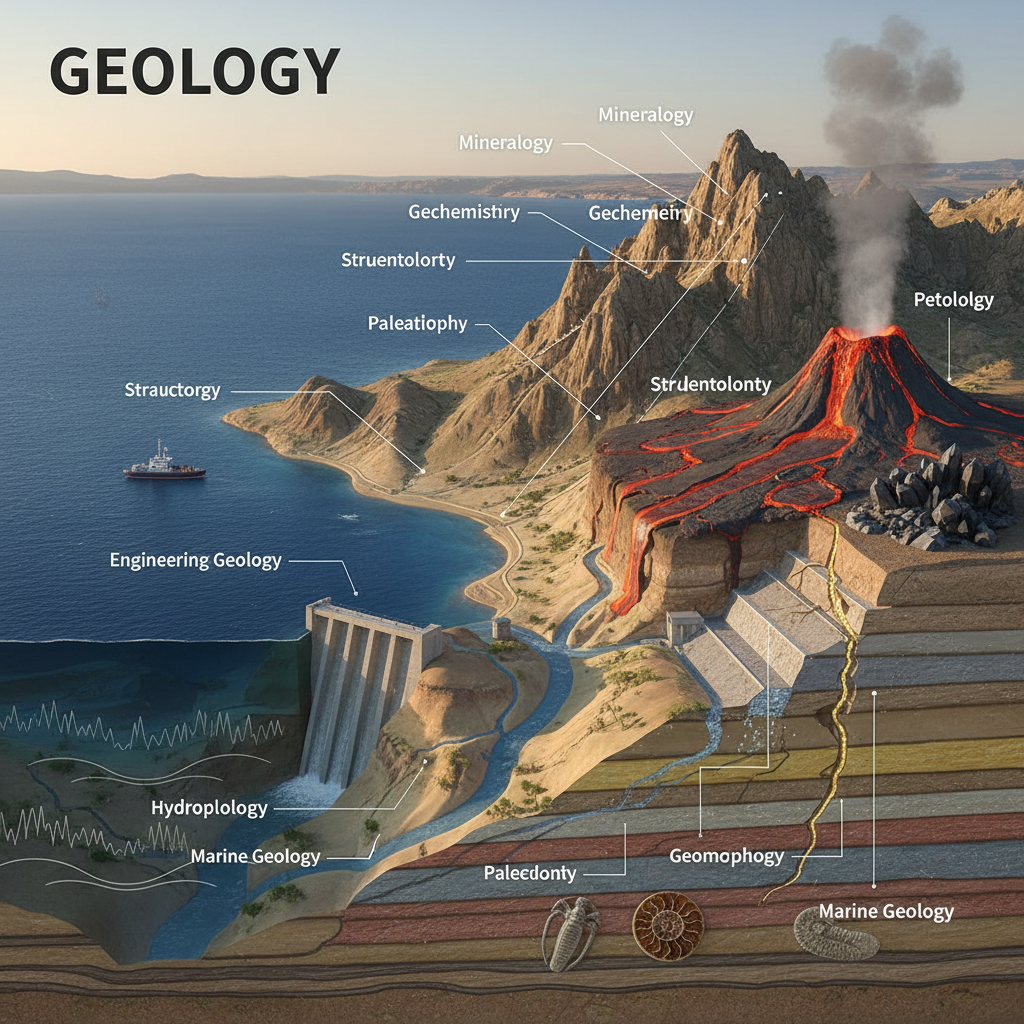
A massive volcanic eruption that tore through what is now central Türkiye roughly 75,000 years ago may have had far broader climate consequences than scientists previously appreciated, according to new geochemical research analysing tephra deposits from the Acıgöl caldera. The findings, published in late 2025, expand the global catalogue of climate-altering super-eruptions and complicate long-held assumptions about which volcanoes pose the greatest risk to planetary stability.
The research team, working with samples drawn from across the Cappadocia region, used trace-element fingerprinting and isotopic analysis to match volcanic glass shards found in distant lake sediments and ice cores to the Acıgöl eruption. The match suggests the event injected enough sulphur dioxide and fine ash into the stratosphere to cause measurable hemispheric cooling — an effect that until now had been attributed primarily to better-known eruptions such as Toba in Indonesia.
What the Geochemistry Reveals
Tephrochronology — the science of dating and correlating volcanic ash layers — has matured rapidly in the past decade thanks to advances in laser-ablation mass spectrometry. By measuring ratios of rare-earth elements like neodymium, europium, and ytterbium, researchers can now match a single ash shard to its parent volcano with remarkable precision. The new study leveraged these techniques to demonstrate that the Acıgöl eruption produced a chemically distinctive rhyolitic ash with elevated zirconium and depleted strontium signatures, allowing it to be distinguished from other regional eruptions in the eastern Mediterranean.
The Acıgöl caldera sits within Türkiye’s Central Anatolian Volcanic Province, a region long studied for its dramatic ignimbrite plateaus that gave rise to the famous “fairy chimneys” of Cappadocia. Background information on this volcanic landscape is available through the Smithsonian Global Volcanism Program, which maintains records on more than 1,400 Holocene volcanoes worldwide. According to the program’s classification system, Acıgöl is considered dormant rather than extinct, and its caldera shows evidence of multiple large explosive episodes during the late Pleistocene.
Why This Discovery Matters
The implications of the study extend well beyond academic stratigraphy. If a volcano like Acıgöl — far less famous than Toba, Yellowstone, or Campi Flegrei — was capable of triggering hemispheric cooling, then current global hazard assessments may underestimate the number of high-impact eruption sources. Climate modelling work supported by organisations like the United States Geological Survey Volcano Hazards Program has historically focused on a relatively small set of “usual suspects.” Expanding that list could reshape both insurance industry risk pricing and international scientific monitoring priorities.
Researchers involved in the project noted that the eruption coincides with a period of documented climatic instability recorded in Greenland ice cores. While correlation does not prove causation, the geochemical fingerprint match strengthens the case that mid-sized continental eruptions can punch above their weight when their magma is rich in sulphur. A separate strand of recent volcanology research, summarised by Nature’s volcanology coverage, has emphasised that sulphur yield — not eruption magnitude alone — is often the decisive factor in determining global climate impact.
Regional and Geopolitical Context
For Türkiye, the findings carry domestic relevance as well. The Cappadocia region is a UNESCO World Heritage site and a major tourism destination, drawing millions of visitors annually to landscapes carved from volcanic tuff. Turkish geological authorities have been steadily expanding seismic and gas-emission monitoring across the Central Anatolian Volcanic Province, although Acıgöl itself is not currently classified as showing unrest. Local researchers have called for increased baseline monitoring in light of the new findings, arguing that even low-probability events warrant attention given the scale of potential global consequences.
What to Watch Next
Future work will likely focus on refining the eruption’s date, quantifying its sulphur output more precisely, and searching for additional ash horizons in marine sediment cores from the Black Sea and eastern Mediterranean. Researchers are also expected to revisit other “minor” Pleistocene eruptions with the new geochemical toolkit, potentially uncovering further hidden contributors to past climate volatility. As the field of tephrochronology continues to mature, the line between local volcanic events and global climate forcing is becoming increasingly blurred — with significant consequences for how humanity prepares for the next major eruption.
For more in-depth coverage of geological discoveries, climate science, and earth system research, visit science.wide-ranging.com for related articles and ongoing reporting.