




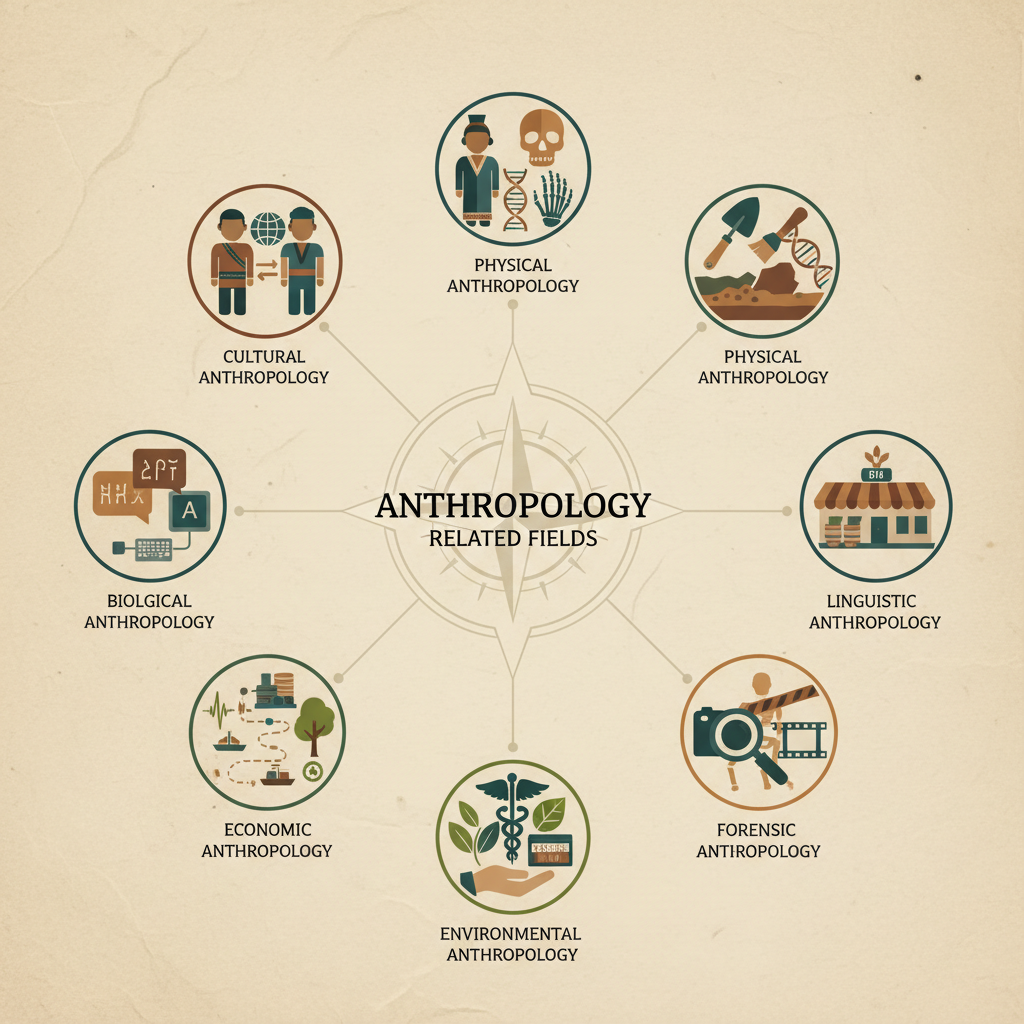
From battlefield recoveries in Eastern Europe to cold-case identifications in the American Midwest, forensic anthropology is having a moment of rapid technological transformation in 2025. Researchers and law enforcement agencies are increasingly turning to a hybrid toolkit — combining traditional skeletal analysis with forensic genetic genealogy, isotopic profiling, and AI-assisted facial approximation — to identify human remains that have eluded investigators for years, sometimes decades. The result is a wave of breakthroughs that is reshaping how the dead are returned to their families.
Forensic anthropology is the application of physical anthropology to legal investigations, focusing on the analysis of skeletal remains to determine biological profile (age, sex, ancestry, stature), trauma, and time since death. For most of the discipline’s history, those determinations rested on careful osteological observation and population-specific reference standards. But the last several years have seen a methodological shift, as practitioners integrate molecular and computational tools that were unavailable to earlier generations of bone specialists. According to the American Association for the Advancement of Science, this convergence between anthropology and genomics is one of the most consequential developments in modern forensic science.
Genetic Genealogy and the Cold Case Revolution
The clearest example of the new paradigm is forensic investigative genetic genealogy (FIGG), the same technique that famously helped identify the Golden State Killer in 2018. Forensic anthropologists now routinely partner with FIGG laboratories to extract DNA from skeletal remains — often degraded, fragmentary, or decades old — and upload SNP profiles to public genealogy databases like GEDmatch. In 2025, multiple jurisdictions have reported identifications of “Doe” cases dating back to the 1970s and 1980s, including remains that traditional methods alone could never have matched. The Federal Bureau of Investigation has expanded its support for state and local agencies pursuing these cases, particularly through the National Missing and Unidentified Persons System (NamUs).
Anthropologists remain central to this workflow. Before any DNA can be sequenced, a specialist must assess which bone offers the highest likelihood of viable nuclear DNA — typically the petrous portion of the temporal bone or the cementum of teeth — and document the skeletal context. Dr. Dawnie Steadman, director of the Forensic Anthropology Center at the University of Tennessee, has noted in recent interviews that the discipline’s role is “expanding rather than diminishing” as DNA technologies improve, because contextual interpretation of trauma, taphonomy, and burial environment remains irreplaceable.
Isotopes, AI, and the Geography of the Dead
Stable isotope analysis is another tool gaining traction. By measuring ratios of strontium, oxygen, carbon, and nitrogen in bone and tooth enamel, anthropologists can reconstruct where an individual lived and what they ate during different life stages. This is proving especially valuable in identifying migrants whose remains are recovered along borders, including the U.S.–Mexico frontier, where organizations like the Pima County Office of the Medical Examiner work with academic anthropologists to repatriate the dead. Isotope maps help narrow geographic origin even when no documents survive.
Artificial intelligence is also entering the field. Recent peer-reviewed work has demonstrated that machine-learning models can estimate biological sex and ancestry from cranial measurements with accuracy rivaling experienced practitioners, and AI-driven facial approximation tools are producing more lifelike reconstructions for public appeals. Critics caution, however, that ancestry estimation algorithms can encode population biases and must be validated against diverse reference samples before being used in court.
Why It Matters
Beyond the headlines, the stakes of this work are profoundly human. Tens of thousands of unidentified remains sit in medical examiner storage across the United States alone, and conflict zones from Ukraine to the western Sahel are generating new caseloads faster than they can be processed. Each identification closes a missing-persons file, allows a family to mourn, and — in criminal cases — can reopen avenues for prosecution. The discipline’s growing fusion of bone, molecule, and code is, at its core, a project of restoring dignity.
What to watch next: expect continued debate over the ethics of genealogy databases, expanded federal funding for unidentified-remains backlogs, and new standards from the National Institute of Standards and Technology on validating AI tools in forensic contexts. The pace of change suggests that many cases long considered unsolvable will, in the next few years, finally yield names.
For more reporting on forensic science, anthropology, and the technologies reshaping how we understand human remains, visit science.wide-ranging.com for related coverage and in-depth features.