




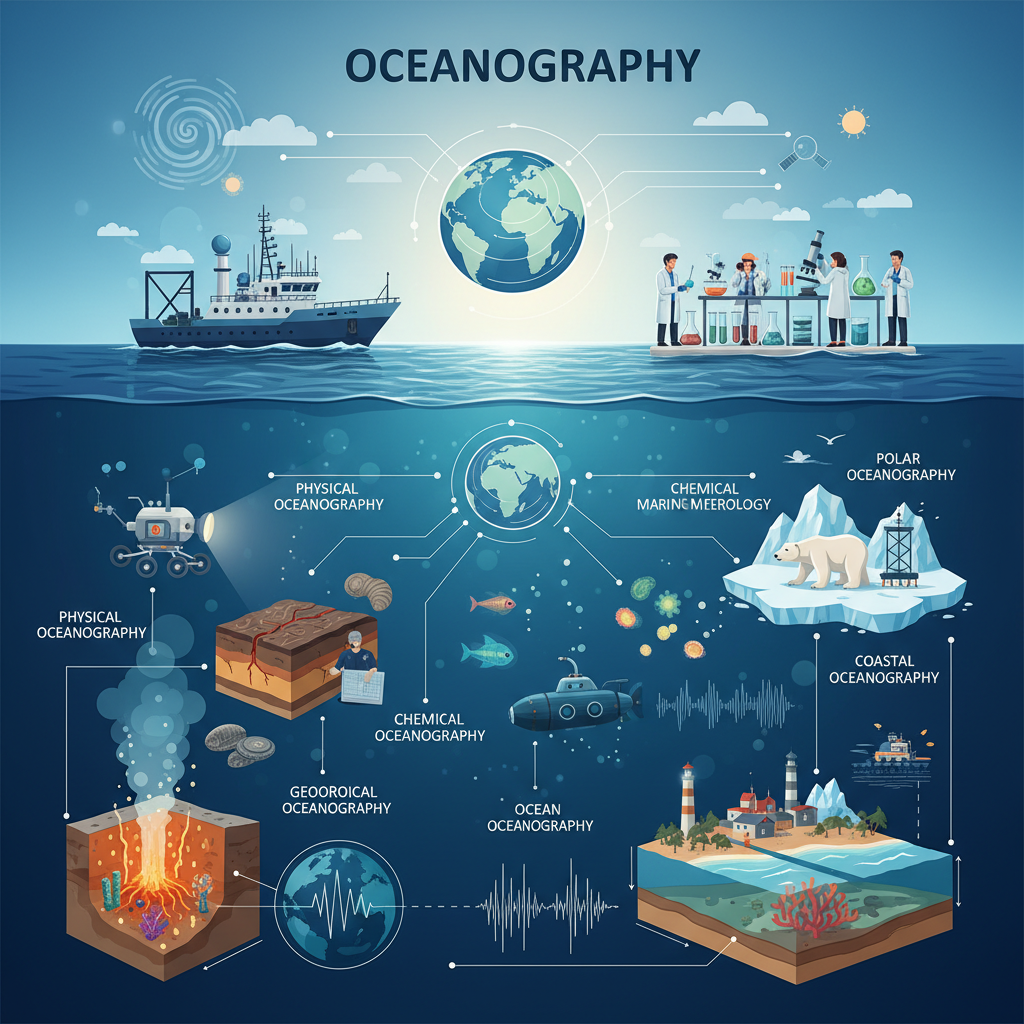
A new wave of polar oceanography research is reshaping our understanding of how warm ocean waters are eroding Antarctica’s floating ice shelves from below, with scientists warning that the pace of basal melting has accelerated significantly in recent years. The findings, drawing on a combination of autonomous underwater vehicle data, satellite altimetry, and oceanographic moorings, point to a polar ocean system in rapid transition — one with profound implications for global sea level rise and ocean circulation.
What the Research Shows
Researchers studying the boundary between the Southern Ocean and the Antarctic ice sheet have documented a striking increase in the volume of relatively warm Circumpolar Deep Water (CDW) intruding onto the continental shelf. This water, typically just a few degrees above freezing, is nonetheless warm enough to melt the underside of ice shelves at rates that vastly exceed surface melting. According to recent reporting from the British Antarctic Survey, the West Antarctic sector — particularly the Amundsen Sea Embayment, home to the Thwaites and Pine Island glaciers — remains the epicenter of concern.
Field campaigns deploying instruments beneath the ice, including the Icefin underwater robot operated as part of the International Thwaites Glacier Collaboration, have revealed complex melt patterns shaped by underwater terraces, crevasses, and saline currents. Far from a uniform thinning, the ice shelf base displays a sculpted landscape where warm water funnels into structural weaknesses, accelerating retreat at “pinning points” that anchor the shelves to the seafloor.
Why It Matters
Ice shelves themselves do not raise sea level when they melt, because they already float on the ocean. But they act as enormous buttresses, holding back the grounded ice behind them. When shelves thin or collapse, the inland glaciers they restrain can flow into the sea far more quickly. The Thwaites Glacier alone — sometimes nicknamed the “Doomsday Glacier” — contains enough ice to raise global sea level by roughly 65 centimeters if it were to fully discharge into the ocean, with potential cascading effects on neighboring basins that could push that figure considerably higher.
The new oceanographic data underscore that the dominant trigger for this loss is not warming air, but warming water. As the National Oceanic and Atmospheric Administration has noted in its annual Arctic and Antarctic assessments, shifts in wind patterns associated with a strengthening Southern Annular Mode are pushing more CDW poleward and onto the continental shelf, where it makes contact with ice shelf cavities.
The Role of Ocean Circulation
Beyond sea level, the implications extend to global ocean circulation. The dense, cold, salty waters formed near Antarctica — known collectively as Antarctic Bottom Water — drive a critical limb of the global overturning circulation. As meltwater freshens the surface ocean around the continent, the production of this dense water appears to be slowing. A study highlighted by Nature earlier this year suggested the Antarctic overturning could weaken by as much as 40% by 2050 under high-emissions scenarios, potentially altering nutrient transport, deep-ocean oxygen levels, and even atmospheric CO₂ uptake.
Expert Voices
Polar oceanographers involved in the work have stressed that uncertainty remains high, particularly regarding tipping points. Researchers affiliated with the Thwaites collaboration have repeatedly emphasized that while a rapid collapse is not imminent within a decade, the system shows clear signs of destabilization on multi-decadal timescales. “What happens at Thwaites doesn’t stay at Thwaites,” scientists have noted in published briefings, pointing to the interconnected nature of West Antarctic ice dynamics.
Modeling efforts published in collaboration with institutions including Scripps Institution of Oceanography are increasingly focused on resolving the small-scale ocean processes inside ice shelf cavities — turbulence, double-diffusive convection, and tidal mixing — that current global climate models struggle to capture.
What to Watch Next
Upcoming Antarctic field seasons are expected to bring expanded autonomous vehicle missions, new mooring deployments along the Amundsen Sea continental shelf, and continued satellite monitoring of grounding-line retreat. International coordination through programs such as the Southern Ocean Observing System will be central to detecting whether the recent acceleration represents a stepwise change or a continuing trend. For coastal communities worldwide — from Pacific atolls to North American port cities — the answers being assembled at the bottom of the world will help define adaptation planning for the rest of the century.
For more stories on ocean science, climate research, and the frontiers of polar exploration, visit and bookmark science.wide-ranging.com for related coverage and in-depth features.