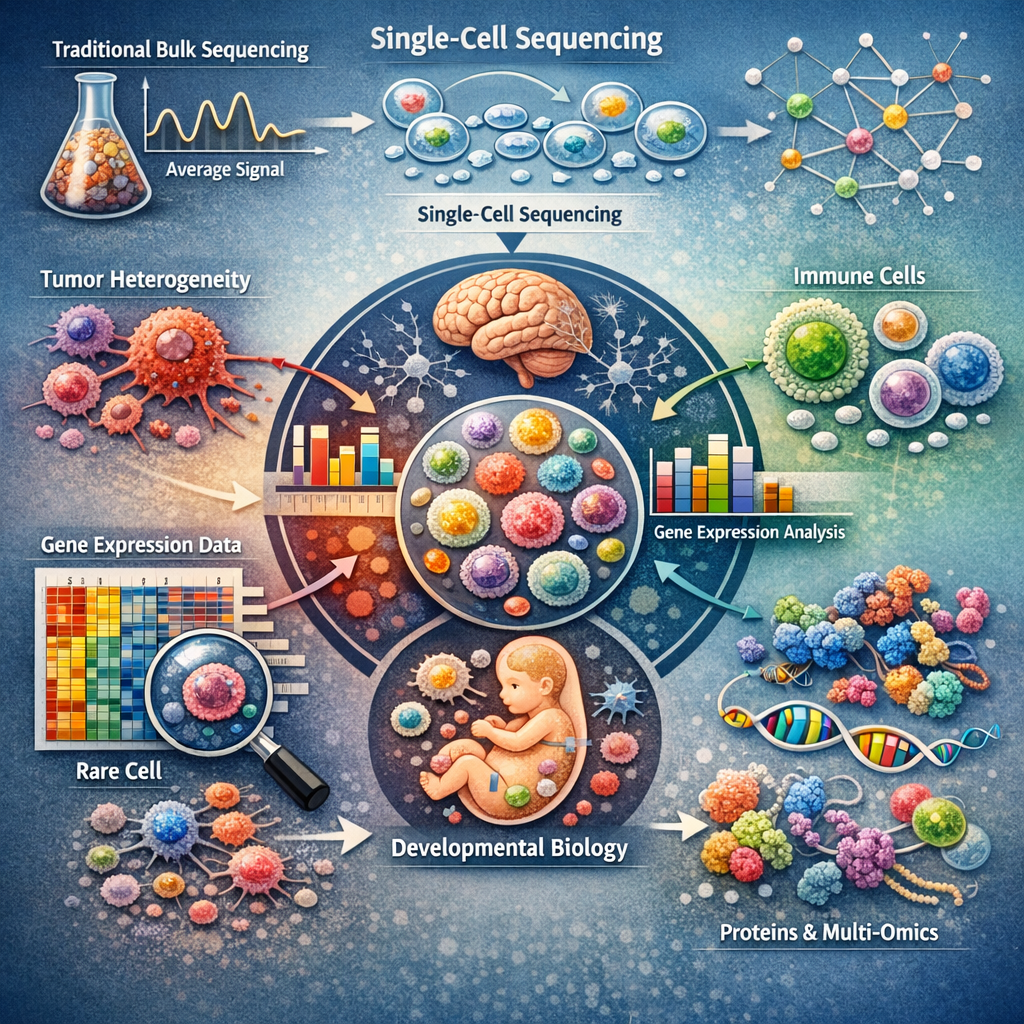





Single-cell sequencing is a powerful and rapidly advancing genomic technology that allows scientists to study the genetic material, gene expression patterns, or other molecular features of individual cells rather than analyzing a bulk mixture of many cells together. In traditional sequencing approaches, thousands or even millions of cells are often processed at the same time, which produces an average signal across the entire sample. While this can be useful, it may hide important differences among cells, especially when a sample contains many distinct cell types or when rare but biologically important cells are present. Single-cell sequencing overcomes this limitation by examining cells one at a time, giving researchers a much more detailed view of cellular diversity. By analyzing individual cells, scientists can uncover differences between cell types, identify rare cell populations, trace developmental pathways, and better understand complex biological systems such as tumors, immune tissues, brain regions, and developing organs. For example, in a tumor sample, not all cancer cells are identical. Some may grow faster, resist treatment, or spread to other parts of the body more easily than others. Single-cell sequencing can help reveal these differences, providing valuable insight into tumor evolution, drug resistance, and potential treatment strategies. Similarly, in the immune system, this technology can distinguish between many specialized immune cell types and show how they respond to infection, vaccination, inflammation, or autoimmune disease. One of the most common forms of this technology is single-cell RNA sequencing, which measures gene expression in individual cells. This helps researchers determine which genes are active in each cell and how those activity patterns differ across a tissue or disease state. Other forms of single-cell sequencing can examine DNA mutations, chromatin accessibility, epigenetic modifications, proteins, or combinations of several molecular features at once. These multi-omic approaches provide an even richer picture of how cells function, how they change over time, and how they interact with their surrounding environment. This approach has become especially important in fields such as cancer research, immunology, neuroscience, and developmental biology, where subtle cellular differences can have major biological and medical significance. In neuroscience, for instance, single-cell sequencing has helped classify the many different types of neurons and supporting cells in the brain, improving our understanding of brain organization and neurological disease. In developmental biology, it allows scientists to follow how early cells gradually specialize into different tissues and organs. Overall, single-cell sequencing has transformed modern biology by revealing that even cells that appear similar under a microscope can have highly distinct molecular identities and functions.